
DONT SPLASH Stages Overview
Facts checked October 25, 2026 against live gameplay sources.
Quick answer
- A run is built from rooms; each room contains named stages that announce their hazard on a banner.
- The six named stages in order: Pillar Hall, Broken Walkway, Sinking Platforms, Rotating Bridges, Maintenance Lock, and the rising-water escape.
- On Easy the HUD shows Rooms: 1/3 — a full clean run takes about five minutes.
- Hard unlocks after two Normal clears: longer maps, fewer platforms, 450 coins per escape.
Rooms and stages are two different things
The most common confusion in DONT SPLASH: players ask "how many stages are there?" and get three different answers. Both are true at once:
- A room is the unit of progress. The HUD counts them — on an Easy run it reads Rooms: 1/3, moving as you clear each one.
- A stage is a named section with its own hazard, announced on a banner when you enter it. One room can contain more than one named stage.
So "three rooms" on Easy does not mean "three stages." And since the game was retitled [NEW STAGES] DONT SPLASH on October 23, 2026, additional stages exist beyond the six banners below — the developer has not published a complete list, and any exact total you see is a guess.
The six named stages in order
Every stage announces itself with a banner as you enter. These are the six confirmed banners, in the order a run presents them — the flow diagram shows where each run-killer hides:
Escape flow — six stages, one run
1
Pillar Hall
Stay low, follow arrows
2
Broken Walkway
Pick ONE lane, commit
3
Sinking Platforms
Never stop on light tiles
Standing still = tile sinks
4
Rotating Bridges
Board when aligned
Jumping at a closing gap
5
Maintenance Lock
Valve → pebble decoy → valve
Opening valves near the monster
6
Rising Water
SPRINT — silence is over
Grabbing "one more" pebble
1. Pillar Hall
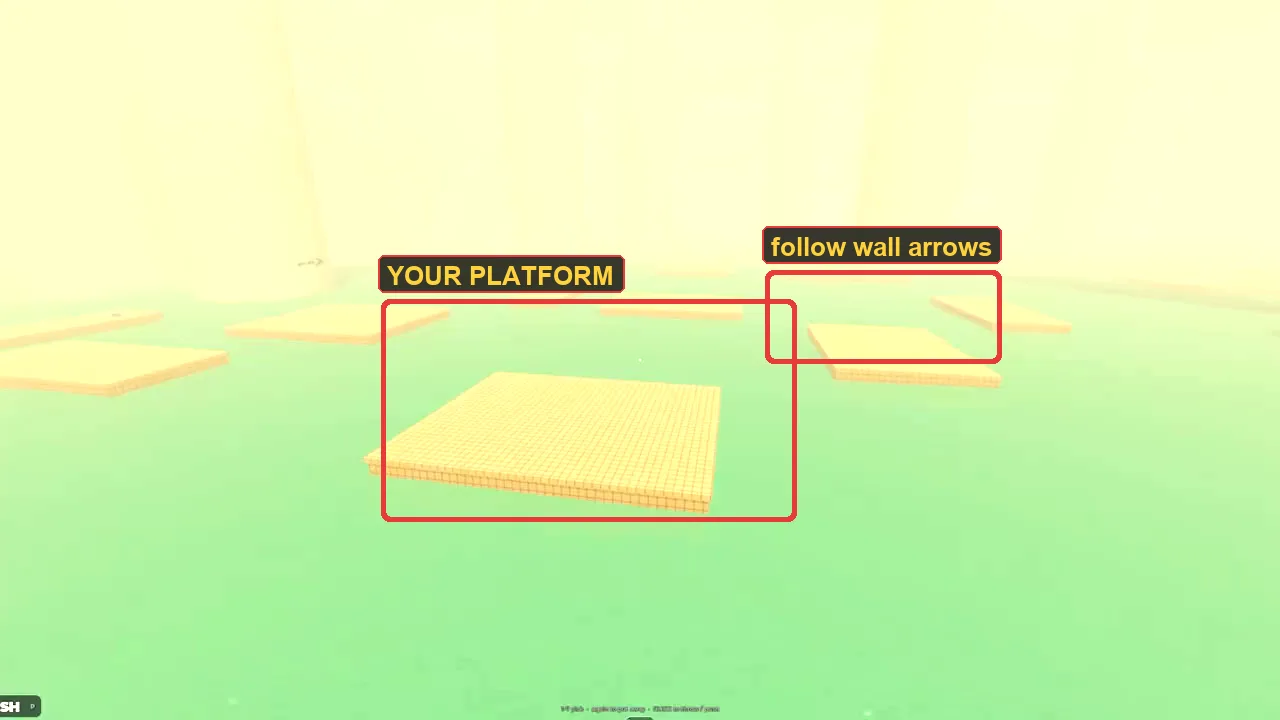
Columns standing in water, with platforms threaded between them. The in-game ProTip: stay low and move around the columns to hide. Follow the wall arrows, collect the pebble piles as you pass, and learn the monster's patrol route. This is the run's tutorial stage — no complex mechanics, just the core discipline of dry landings.
2. Broken Walkway
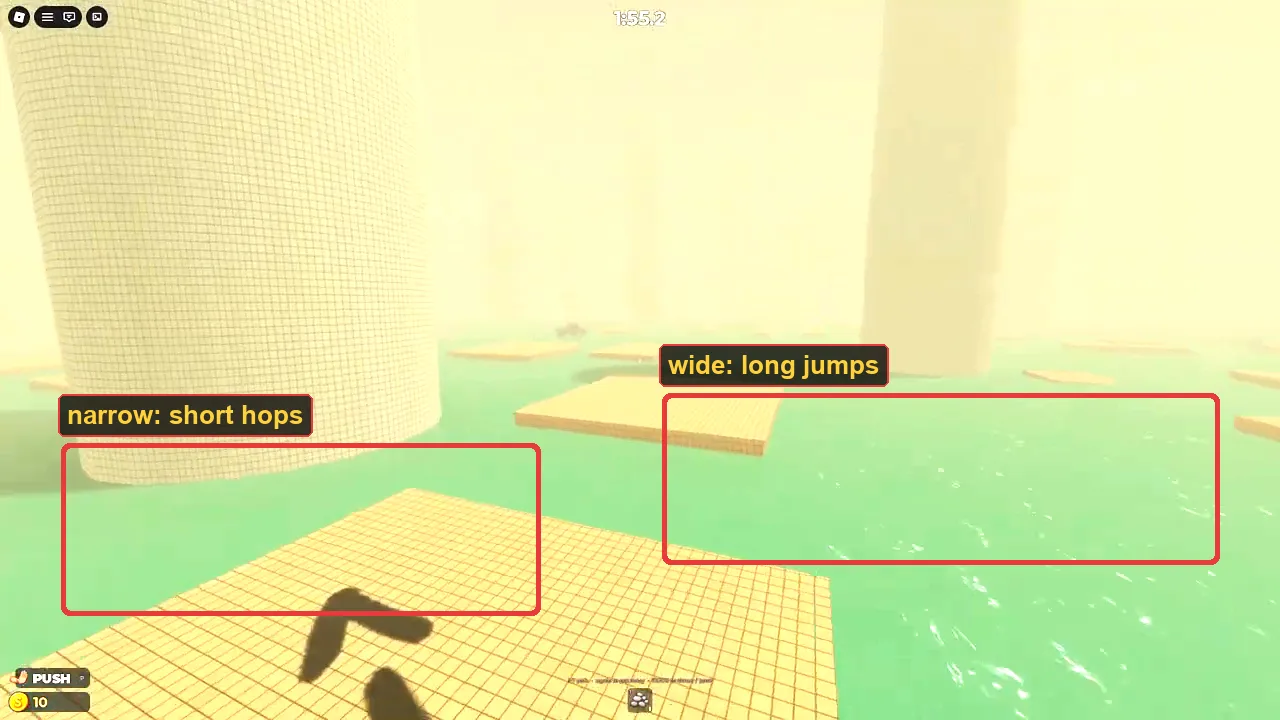
The banner frames the choice: narrow ledges with short jumps or wide platforms with long jumps. Two lanes, two playstyles — precise footwork versus committed sprint jumps. Pick your lane before entering and keep moving; stopping mid-walkway to reconsider is how edges get slippery.
3. Sinking Platforms
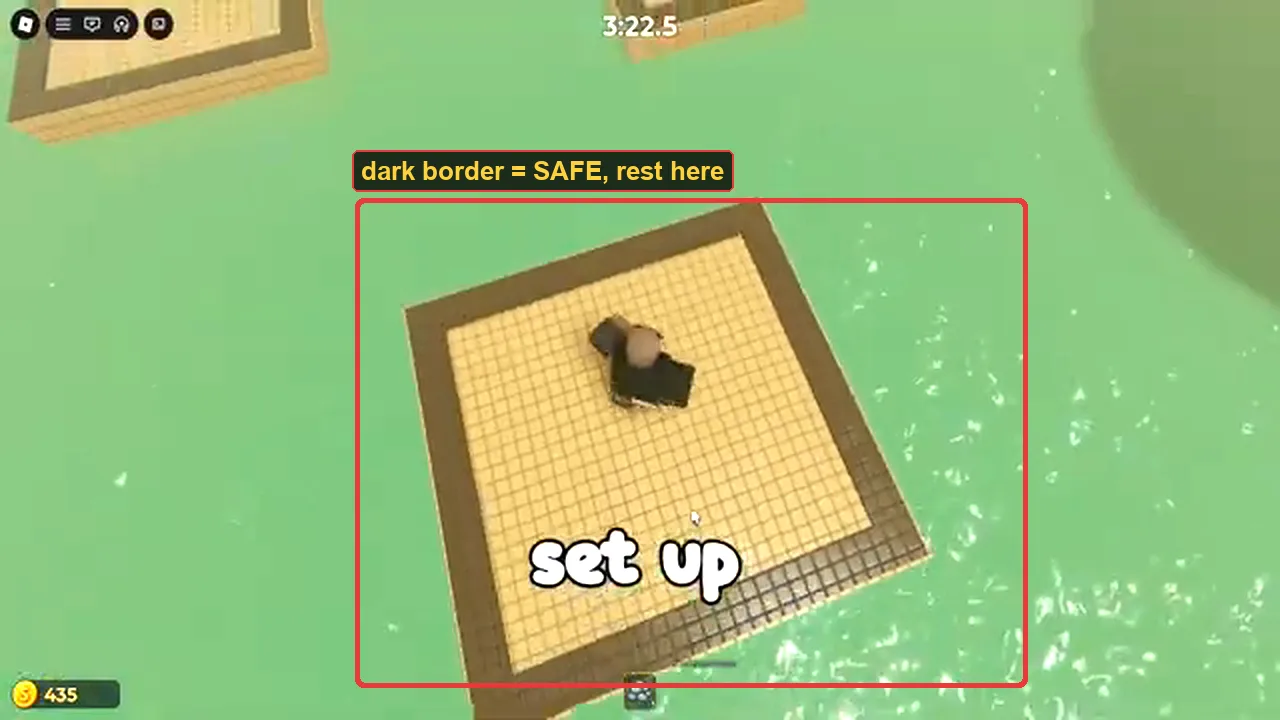
The banner carries the rule everyone learns the hard way: "Platforms sink while you stand on them. Keep moving. Dark border platforms are safe." Light tiles submerge seconds after you land; dark-bordered tiles hold forever. Hop light tiles without pausing and use dark tiles as rest stops.
4. Rotating Bridges
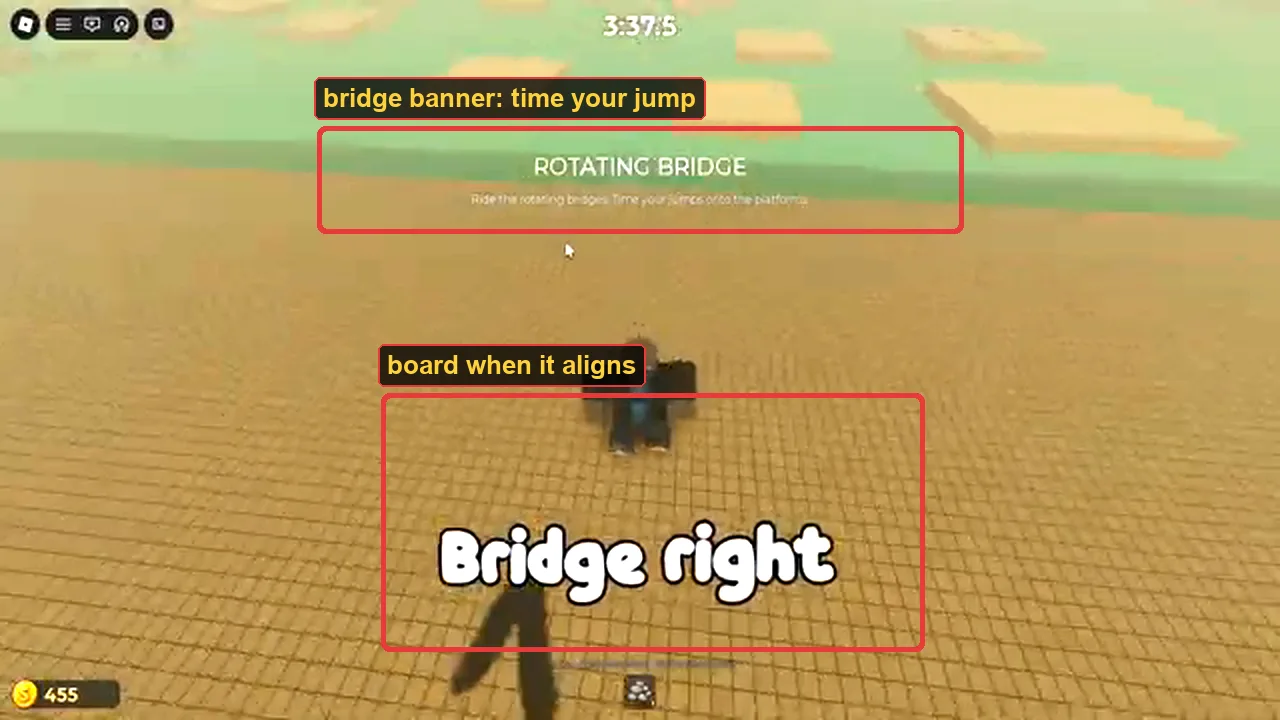
Long planks rotate over the water. The banner: "Ride the rotating bridges. Time your jump onto the platforms." Board as the plank swings to your platform, ride the rotation, step off as it aligns with the next fixed platform. Jumping at a still-closing gap is the most common death here.
5. Maintenance Lock
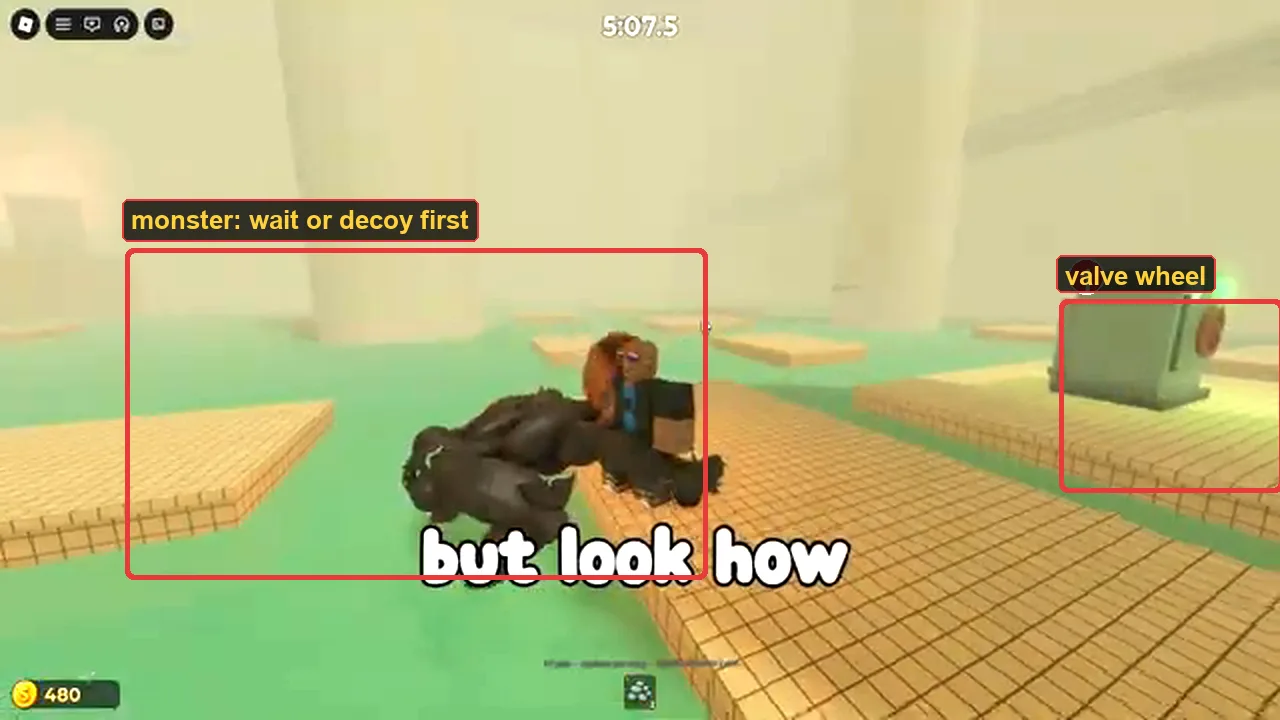
The final puzzle. The banner: "Open both valves to unlock the door. The machines are loud." Two red valve wheels sit on cabinets across the room's wings. Each opening makes noise that pulls the monster toward you — so locate it first, open the far valve, throw a pebble as a decoy, then open the second.
6. The rising-water escape
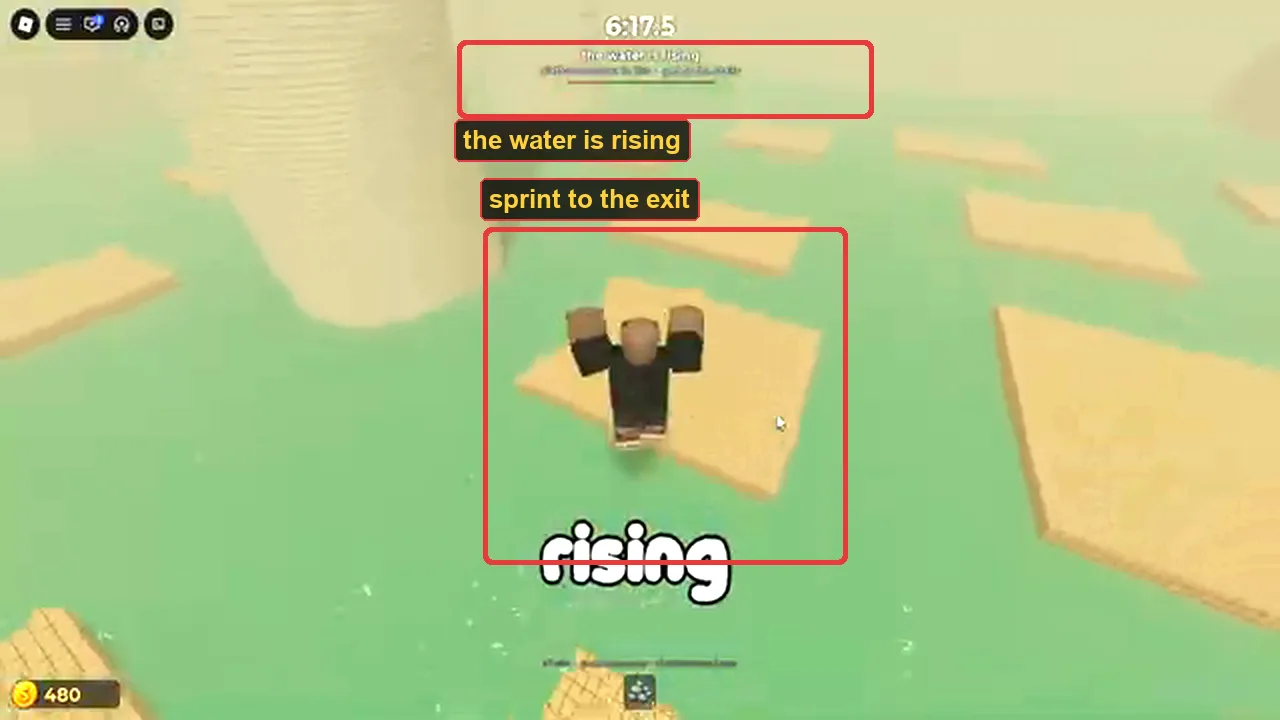
The second valve starts the flood. The run inverts: speed beats silence, the exit door is unlocked (usually above), and warning panels count down — "platforms under in 30 seconds." One player measured the full flood at roughly 60 seconds. Climb the yellow blocks and get out; escaping ends the run and pays your coins.
How the difficulties change the stages
| Difficulty | What changes | Repeatable payout |
|---|---|---|
| Easy | Small rooms, many platforms, gentle gaps | 150 |
| Normal | Larger rooms, fewer platforms, wider gaps | 300 |
| Hard | Longest maps, fewest platforms, tightest jumps — unlocked after 2 Normal clears | 450 |
The stage names and banners stay the same across difficulties — what changes is platform density and jump tolerance. Hard is the money mode: 450 coins per escape from the repeatable lines, the highest repeatable income in the game.
New stages: what [NEW STAGES] added
On October 22–23, 2026 the game went through its Halloween update and then a retitling to [NEW STAGES] DONT SPLASH, adding new stage content beyond the original six banners. Recorded runs of the new content show additional rooms appearing after the classic Maintenance Lock sequence on updated maps. A complete official stage list has not been published — we update this page as new stages get documented.
Stages FAQ
How long is one full run?
A clean Easy escape runs about five minutes across its three rooms. Recorded clears range from 5:25 to 14:39 — the difference is deaths, not difficulty. Runs past fifteen minutes usually mean the Maintenance Lock valve order needs work.
Does the room counter always move after a clear?
It moves when a room's objective completes; stages inside a room do not count individually. If the counter seems stuck, check whether the room still has an unfinished objective (usually: the valves).
What is the Farm map in the lobby?
A second map option that is not live yet — selecting it returned a "game not published" error as of October 24, 2026. Videos have teased it as coming soon.
Keep Reading
Ready to try it yourself?
Play DONT SPLASH on Roblox